
The exterior of a home is far more than just a facade; it is a complex ecosystem that serves as the primary defense against the elements and the first impression for any visitor. In recent years, the concept of the “outdoor room” has evolved from a simple backyard patio into a sophisticated extension of the interior living space, complete with luxury finishes and high-tech integrations. Maximizing your outdoor living potential requires a holistic approach that considers both the aesthetic appeal of the property and its underlying structural health. A successful exterior transformation begins with a clear understanding of how different components—from the driveway to the roofline—work together to create a cohesive and functional environment.
1. Assessing the Scope of Full-Scale Exterior Transformations

Planning a comprehensive overhaul of your property’s exterior requires a deep dive into the logistical and creative possibilities of the space. Large projects often involve a mix of structural changes, such as moving earth for better drainage, and cosmetic updates, such as replacing aged cladding or outdated doors. A homeowner must decide whether they are seeking a simple refresh or a complete reinvention of the home’s footprint. This phase is characterized by intense research into materials that can withstand local weather patterns while providing the specific architectural look desired. It is during this high-level planning stage that many people begin interviewing various home renovation companies to determine which team has the broad expertise required to manage a project that touches every facet of the home’s exterior from the ground up.
Specifically, the assessment should start with a site survey to identify any grading issues that could cause water to pool near the foundation, as no amount of cosmetic work will last if the ground is not properly prepared. Actionable advice includes creating a “priority list” that separates urgent structural needs, like a leaking roof, from aesthetic wants, like a stone outdoor kitchen. When meeting with potential project leads, ask to see a portfolio of completed exterior projects that show a variety of materials and complex site solutions. A high-quality firm will be able to provide a 3D rendering of the proposed changes, allowing you to visualize how new window placements, siding colors, and deck orientations will interact with the existing structure before the first shovel hits the ground.
2. Establishing a Solid Foundation with Professional Hardscaping
The driveway and walkways serve as the literal and metaphorical “red carpet” of your home, setting the tone for the entire property. These high-traffic areas are subjected to immense physical stress from heavy vehicles and thermal fluctuations that cause the ground to shift. Professional hardscaping involves more than just pouring a surface; it requires an engineered sub-base that facilitates drainage and prevents the surface from cracking or sinking over time. The choice of material—whether it be interlocking pavers, stamped concrete, or traditional blacktop—defines the accessibility and the visual weight of the home’s entry. For many residential projects, the expertise of asphalt contractors is essential for creating a smooth, durable, and cost-effective surface that can handle the rigors of daily use while maintaining a clean, professional appearance.
To ensure longevity in your hardscaping, the sub-grade must be excavated to a depth that accounts for the local frost line and the weight of the intended traffic. Actionable advice includes insisting on a minimum slope of 1% to 2% away from the house to ensure that rainwater does not migrate toward the foundation. If you are opting for a blacktop finish, ensure the contractor uses a high-grade aggregate mix and applies a seal coat only after the material has had sufficient time to cure, usually six to twelve months. For walkways, consider the “path of least resistance”; design the curves to follow natural walking patterns to prevent guests from cutting across the grass. Integrating “permeable” materials in certain areas can also help manage stormwater runoff, reducing the load on your local sewer system and protecting your soil from erosion.
3. Structural Support and Major Site Management
When an exterior project moves beyond simple replacements and into the realm of additions or significant structural alterations, the complexity of the task increases exponentially. This level of work often involves pouring new footings, erecting load-bearing walls for an attached garage, or extending the roofline to cover a new porch. Managing these heavy-duty tasks requires a high degree of coordination with local building departments to ensure that every change meets the rigorous safety codes for wind resistance and weight bearing. Many homeowners find that partnering with established construction companies is the most reliable way to navigate these complexities, as these firms have the specialized equipment and the deep bench of tradespeople necessary to handle the heavy lifting of a site transformation safely and efficiently.
Specific site management involves a “phased” construction schedule that prevents different crews from working on top of one another. For instance, you would not want to install final landscaping while heavy machinery is still on-site to dig footings for a new sunroom. Actionable advice at this stage includes requesting a “site safety plan” that outlines how the crew will protect existing trees, utility lines, and the interior of your home from dust and debris. If your project involves a new addition, ensure that the connection between the old and new structures is “weathertight” through the use of high-quality expansion joints and flashing. A professional construction team will also manage the removal of all heavy waste and debris, ensuring that your property remains as clean as possible throughout the duration of the build.
4. Fortifying the Perimeter with Advanced Security

A modern exterior renovation is incomplete without considering the safety and privacy of the inhabitants. As you update your home’s facade, it is the perfect time to integrate “smart” technologies that act as a silent deterrent to intruders while providing you with remote access to your property’s status. Modern security is about more than just a loud alarm; it involves a layered approach that includes motion-activated lighting, reinforced entry points, and high-definition visual monitoring. The strategic placement of a security camera system ensures that you have 360-degree coverage of your entryways, driveway, and backyard, allowing you to monitor deliveries and property activity from a smartphone app no matter where you are in the world.
For the most effective monitoring, cameras should be mounted at a height that prevents tampering but at an angle (typically around 30 degrees) that captures clear facial features rather than just the tops of heads. Actionable advice includes opting for a system that offers “local storage” in addition to cloud backups to ensure that your data is safe even if the internet connection is interrupted. You should also look for cameras with high-quality night vision and “two-way audio” capabilities, which allow you to communicate with people at your door through the camera’s speaker. When planning the installation, ensure that the power supply for the cameras is hidden within the walls or conduit to prevent an intruder from simply cutting the power to the device.
5. Enhancing Aesthetics through Softscaping and Maintenance
The “soft” elements of your exterior—the grass, trees, and flower beds—provide the vital contrast to the hard surfaces of the home and driveway. A lush, healthy lawn acts as a natural carpet that cools the air and provides a comfortable space for children and pets to play. However, maintaining a golf-course-quality yard requires a scientific approach to soil health, hydration, and pest management that goes far beyond simple mowing. Consistent and professional lawn care is a year-round commitment that involves seasonal fertilization, aeration to alleviate soil compaction, and overseeding to maintain a dense, weed-resistant turf. This greenery is the final “finish” that ties the entire renovation together, providing a vibrant frame for your newly updated home.
To maximize the health of your turf, start with a professional soil test to determine the pH level and nutrient deficiencies. Actionable advice includes practicing “mulch mowing,” where grass clippings are left on the lawn to return nitrogen to the soil, and ensuring that you never remove more than one-third of the grass blade height at any one time. For flower beds, use a thick layer of organic mulch to retain moisture and suppress weeds, which reduces the manual labor required to keep the garden looking pristine. If you are planting new trees, choose native species that are adapted to your local climate and soil conditions, as they will require significantly less water and chemical intervention to thrive.
6. Managing the Hierarchy of Specialized Trades
An exterior renovation is rarely the work of a single individual; it is a symphony of various specialists who must work in perfect harmony. From the electrician wiring the outdoor kitchen to the plumber running a gas line for a fire pit, the sheer number of experts on-site can be overwhelming. The success of the project hinges on the ability to manage these contractors and ensure that their work is synchronized with the overall timeline. This requires a high level of communication to prevent one trade from accidentally damaging the work of another—for instance, ensuring the landscaper doesn’t dig up the recently installed irrigation lines or the security wiring.
Specific actionable advice for managing multiple trades includes holding a “pre-construction meeting” with all lead technicians to review the site plan and identify potential conflicts. You should maintain a centralized digital folder that contains every contract, insurance certificate, and warranty for every person working on your property. For large projects, establish a “site foreman” who is the single point of contact for all questions, which prevents conflicting instructions from reaching the workers. Another specific tip is to create a “access and parking plan” for the crews to ensure that their vehicles and equipment do not block your neighbors’ driveways or damage your own property during the process.
7. Protecting the Thermal Envelope with Modern Siding
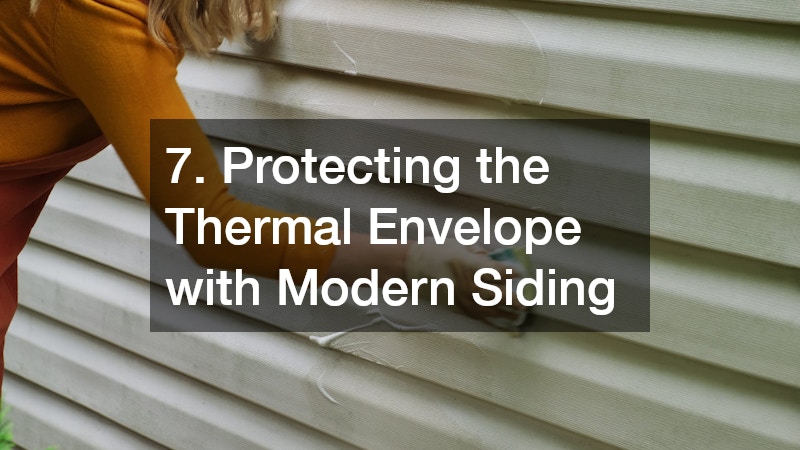
The siding of your home is its first line of defense against wind-driven rain, extreme temperatures, and pests. It also happens to be the most visible aesthetic element, covering the vast majority of the home’s surface area. Modern materials like fiber cement, high-end vinyl, and engineered wood offer a range of textures that can mimic traditional cedar or stone while requiring a fraction of the maintenance. When you work with experienced siding contractors, they focus not just on the visible panels but on the “house wrap” and flashing underneath, which are the true heroes of moisture management. Properly installed siding creates a “rain screen” that allows the walls to breathe while preventing water from penetrating the wooden framing.
When selecting your material, consider the “fire rating” and the “impact resistance,” especially if you live in an area prone to wildfires or hailstorms. Actionable advice includes ensuring that the contractors leave a “gap” at the bottom of the siding to allow for proper drainage and that they use stainless steel or hot-dipped galvanized nails to prevent rust streaks over time. You should also ask about “integrated insulation” siding, which adds a layer of rigid foam behind the panels to increase the R-value of your walls and reduce your heating and cooling costs. The details around the windows and doors are where the quality of the work is most evident; insist on “Z-flashing” above every horizontal trim piece to direct water away from the wall cavity.
8. Ensuring Long-Term Shelter with Expert Roof Systems
A roof is arguably the most critical component of the home’s structure, as its failure can lead to catastrophic damage to the interior finishes and the foundation. A high-quality roofing system is more than just shingles; it is an integrated assembly that includes the decking, the underlayment, the flashing, and the ventilation. During a renovation, it is vital to have your system evaluated by professional roofing services to ensure that the attic is breathing correctly. Without proper airflow, heat and moisture can build up in the attic, leading to “shingle bake” in the summer and “ice dams” in the winter, both of which drastically shorten the lifespan of the roof.
To get the most out of a new roof, opt for synthetic underlayment instead of traditional felt paper, as it provides a much more durable secondary waterproof barrier. Actionable advice includes installing “ice and water shield” in all valleys and along the eaves to protect against the specific pressures of snow and heavy rain. Ensure that the ridge vents and soffit vents are balanced to create a continuous flow of air that keeps the roof deck at a temperature close to the outside air. If you are considering a metal roof, choose a “standing seam” system with hidden fasteners, which eliminates thousands of potential leak points created by exposed screws. A professional inspection should also include a check of the “chimney crickets” and pipe boots to ensure these common failure points are properly sealed.
9. Integrating Functional Design with a Garage Door
The garage door is often the largest moving part of the home and can account for up to 30% of the front facade’s visual area. Upgrading this component provides an immediate boost to curb appeal while improving the security and energy efficiency of the house. Working with a specialized garage door company allows you to choose from a variety of materials—such as steel, wood, or glass—and insulation levels that fit your specific needs. A high-quality, insulated door acts as a thermal buffer for the rest of the house, which is especially important if there is a living space located directly above the garage.
Actionable advice for this upgrade includes choosing a door with a high “R-value” (at least R-12 or higher) if your garage is attached to the house. When selecting a new opener, look for “belt-drive” models with battery backups, which are much quieter than traditional chain-drive models and ensure you can get your car out even during a power outage. You should also ensure that the “bottom seal” and “weather-stripping” are of high quality to prevent drafts and pests from entering the space. For a high-end look, consider “carriage-house” style doors that add architectural character to an otherwise plain suburban home. Safety is also paramount; ensure the “auto-reverse” sensors are properly aligned and tested monthly to prevent accidents.
10. Specialized Upgrades with Dedicated Remodeling

Finally, the transition to a truly high-end outdoor living space often involves “niche” projects that fall outside the scope of general construction. These include the installation of outdoor kitchens with built-in grills and pizza ovens, the construction of pergolas with retractable roofs, and the integration of outdoor sound and television systems. These luxury features require a delicate touch and a deep understanding of how indoor-quality finishes react to being outside year-round. Many homeowners seek out specialized remodeling services to handle these boutique projects, as they require a high level of craftsmanship and an eye for the small details that make a space feel truly custom.
Specific actionable advice for an outdoor kitchen includes using “marine-grade” stainless steel or high-density polyethylene for cabinetry to prevent rust and warping. For countertops, choose “non-porous” stones like granite or soapstone that can withstand UV exposure and temperature swings without cracking. If you are adding an outdoor fireplace or fire pit, ensure it is placed a safe distance from the house and any overhanging trees, and check your local codes regarding wood-burning versus gas-fired units. Lighting should be used to create “zones”; use bright task lighting over the grill area and soft, dimmable ambient lighting around the dining and lounge areas to set the mood for evening entertaining.
The transformation of your home’s exterior is a complex but immensely rewarding journey that elevates the property from a simple structure into a personalized sanctuary. By treating the project as a holistic system—where the driveway supports the landscape, the siding protects the frame, and the roof shields the entire investment—you create a result that is far greater than the sum of its parts. As you stand back and look at your completed property, you will find that your home is no longer just a place where you live; it is a masterpiece of design and engineering that reflects the very best of your lifestyle.